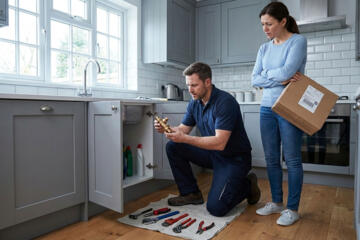
Room-By-Room Inventory
A room-by-room inventory is a documentation method that records items in a consistent structure tied to physical locations. Instead of writing a single list for the whole home, you create a repeatable pattern for each room: what the item is, where it sits, what condition it’s in, and what proof exists. This approach matters when you need to compare versions over time, search for a specific item later, or share records with an insurer or attorney.
For example, in a living room you might record a “TV” with a location like “TV stand, left side,” plus serial number photos and a quick condition note. In a bedroom you record the same fields for a “bed frame,” even if the bed is assembled differently. That consistency is what makes the data usable when you revisit it months later, or when someone else reads it.
Many people start with photos only, then discover they cannot answer basic questions like “Which drawer holds the spare remote?” or “Which model year is the appliance?” A consistent data structure prevents that drift by forcing each entry to include the same categories, even when the item type changes. I’ve seen spreadsheets where columns multiply after the first week, and the later entries become harder to compare—annoying when you need to search by room.
Main Problems And Pain Points
The most common failure mode is inconsistent fields across rooms. One room uses “condition,” another uses “wear,” and a third uses free-text notes. When you later filter for “good condition” or export the data, the dataset stops behaving like a dataset and turns into a pile of text.
Another frequent issue is missing location granularity. “Kitchen” is not the same as “under-sink cabinet, left door.” If you ever need to reconstruct what was present after a loss, the difference between those two levels of detail can determine whether the record is credible. Supporting technologies help here: phone cameras for evidence, barcode or QR scanning for serial numbers, and a consistent naming convention for files.
People also underestimate how quickly documentation becomes outdated. A home inventory changes when you replace a router, move a laptop to a different room, or swap out a mattress cover. A room-by-room structure helps because you can update only the affected room entries instead of rewriting the entire document.
Finally, there’s a privacy and security dependency. If you store photos in a shared folder or sync it to a public link, you may expose addresses, faces, or identifying details. Evidence-based documentation needs access controls, not just storage.
Solutions And Advice
Use A Stable Field Template
Create one template and reuse it for every room. A practical set of fields is: Item Name, Category (electronics, furniture, clothing, documents, tools), Room, Exact Location, Quantity, Brand/Model (if known), Serial Number (if applicable), Purchase Date or Approximate Year, Condition (e.g., New/Good/Fair/Poor), Notes, and Evidence Links (photo filenames or URLs). Keep the field names identical across rooms so sorting and filtering work.
In a spreadsheet, you can start with a single sheet named “Inventory v1.0” and freeze the header row. I’ve found that versioning the template matters; if you change column names later, older rows become harder to interpret. A simple rule: never rename columns after you begin capturing evidence, even if you later refine your wording.
Capture Evidence With File Naming
For each item, store at least one photo that shows the item and one close-up that shows identifying details when relevant. Use a deterministic file naming pattern such as “2026-09-03_LivingRoom_TV_StandWide.jpg” and “2026-09-03_LivingRoom_TV_SerialClose.jpg.” This makes it possible to reconstruct relationships even if links break.
Most phones can capture EXIF metadata, but metadata can be stripped when files are shared. If you rely on EXIF for dates, verify it by checking a sample file after export. I once saw a workflow where the “date taken” shifted after uploading to a cloud drive, which caused confusion during a review.
Set A Room Update Cadence
Choose a cadence that matches your reality. For a move-prep inventory, a one-time capture within a week may be enough. For ongoing records, a quarterly review works for many households: update only rooms with changes, and add new entries rather than editing everything.
Track updates with an “Inventory Last Updated” date per room. If you maintain a “Change Log” tab, you can record what changed and why, such as “2026-03-12: replaced router; added serial photos.” That extra column prevents silent edits that later look inconsistent.
Control Access And Sharing
Store the inventory in a private location with controlled sharing. If you use cloud storage, restrict access to specific accounts and avoid public links. For evidence photos, consider redacting faces or sensitive documents before sharing externally.
When sharing with an insurer or attorney, share the minimum necessary subset: the relevant room entries and evidence files. This reduces exposure while keeping the record usable. If you need to export, export a read-only PDF version of the inventory table and keep the editable source separate.
Case Examples
Move Prep With Partial Knowledge
An anonymized household preparing for a move records items room-by-room over three evenings. They do not know serial numbers for every device, so they capture model numbers from labels and note “serial not found” in the Serial Number field. For each room, they include one wide photo of the item’s placement and one close-up of the label.
When packing starts, they discover a missing remote for the TV. Because the inventory already includes “TV remote: living room, drawer 2,” they can search the right location first instead of scanning the entire house. The record also helps them remember which items were already documented before boxes were sealed.
Insurance Review After A Leak
Another anonymized scenario involves a small kitchen leak. The household had an inventory created earlier, but they had not updated it since buying a new countertop appliance. During the claim, they add only the missing appliance entries and attach evidence files with the same naming pattern.
The insurer review goes faster because the inventory uses consistent fields across rooms and the evidence links match the item rows. The household also notes the approximate purchase year when the receipt is unavailable, which keeps the record honest rather than guessing exact dates.
Comparison Table And Checklist
| Method | Best For | Main Risk | What To Add |
|---|---|---|---|
| Photos Only | Quick capture | Hard to search and verify | Item rows with room + location |
| Spreadsheet With Fields | Claims, audits, updates | Broken links if files move | Stable file naming + evidence links |
| Paper Binder | Offline backup | Slow updates and search | Photo index by room and date |
Checklist for a consistent room-by-room structure:
- One template: same column names for every room.
- Location granularity: record where the item sits, not just the room name.
- Evidence pairing: each row links to at least one photo filename.
- Identifying details: capture model/brand and serial when available.
- Condition scale: use a fixed set of labels across the dataset.
- Update log: record when a room was last revised.
- Access controls: keep the inventory private and share only needed subsets.
Common Mistakes
People often mix “room inventory” with “packing list.” A packing list changes daily and includes temporary box numbers, while an inventory aims to describe the item itself and its location. If you merge them, you lose the ability to compare records over time.
Another mistake is guessing fields without marking uncertainty. If you do not know the purchase year, write “approx. 2019” rather than inventing a specific date. That honesty matters when someone else reviews the record.
Some workflows also break evidence links. If you store photos in a folder that later gets renamed, the spreadsheet may still show old links. A practical fix is to store evidence in a predictable folder structure and keep file names stable. I’ve seen a “Room Photos” folder reorganized after a software update, and suddenly every evidence reference became a dead end.
Finally, avoid over-sharing sensitive details. Photos of documents, keys, or license plates can leak into shared links. Redact or crop before uploading, and keep the editable master record separate from any exported copies.
FAQ
What fields should every row include?
Use the same set of fields for every item: Item Name, Category, Room, Exact Location, Quantity, Brand/Model, Serial Number (if available), Condition label, Notes, and Evidence Links.
How many photos per item are enough?
At minimum, capture one photo showing the item in place and one close-up of identifying labels when relevant. For small items, one clear label photo plus a placement photo often works.
How do I handle missing serial numbers?
Record the serial field as “not found” and capture the model/brand label instead. If you later locate the serial, add a new evidence photo and update only that row.
Should I store the inventory in a spreadsheet or a document?
A spreadsheet supports filtering and updates, while a PDF export supports sharing. Many people keep the spreadsheet as the source and export a read-only version for external review.
How do I keep the inventory private?
Use private storage with restricted access, avoid public share links, and redact sensitive items in photos. Share only the rooms and evidence files needed for the specific request.
Author's Insight
A consistent room-by-room inventory behaves like a small database: stable fields, predictable identifiers, and evidence that can be traced back to each row. The biggest reliability gains come from naming conventions and fixed condition labels, not from adding more categories. If you treat the inventory as a living record with a room-level update date, you reduce the “all-or-nothing” problem where old data becomes unusable. When evidence links break, the dataset stops answering questions, so file naming and folder structure deserve more attention than the photo quality.
Key Takeaways
- Use one stable template for every room so sorting and searching stay reliable.
- Record exact locations and pair each item row with evidence filenames.
- Update only changed rooms on a schedule that matches your situation.
- Control access and redact sensitive details before sharing.