Account Centralization Basics
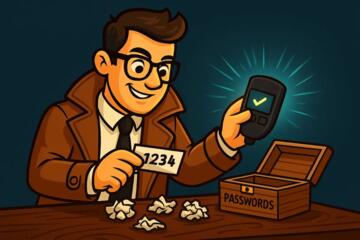
Centralizing your digital life means reducing the number of places where account credentials and recovery options live. A practical setup often uses a password manager for passwords, an identity provider for sign-in, and a recovery plan for email and phone access. In the U.S., the FTC reported 2.6 million identity theft and fraud reports in 2023, and account takeover is a common pathway when credentials leak. Password managers also change the failure mode: instead of reusing one password across many sites, you generate unique passwords per account and store them behind one strong master credential.
Use one vault.
Start with measurable scope. List your top 10 accounts by consequence: email, banking, health portals, tax filing, and major retailers. Then check how many passwords are reused today; many people discover reuse across 3–6 services after a quick audit. That reuse matters because a single breach can trigger credential stuffing, where attackers try leaked username-password pairs on other sites. Centralization reduces that blast radius when each site has a different password.
Problems And Pain Points
People often centralize the wrong layer. They move passwords into a single notes app, then keep the same weak master password, which turns the notes app into a single point of failure. Others centralize login links and forget that session cookies can persist on shared browsers, which creates account access even after you change passwords. A third pattern is “MFA everywhere” without verifying that the recovery path matches the MFA method, so you lock yourself out when you lose a phone.
Recovery breaks first.
Credential stuffing works because many sites accept the same username-password pair across services. Attackers automate login attempts at scale, and success rates depend on how often users reuse passwords and how quickly sites detect abuse. Once inside, attackers may change the recovery email, add new MFA devices, or transfer funds where workflows allow. Those actions can be fast because many account settings pages do not require step-up authentication after a successful login, especially when the session is already trusted.
Tips And Recommendations
Start With A Threat Map
Write down the top 3 ways you lose access: forgotten passwords, lost phone, compromised email, or malware on a laptop. Then map each risk to accounts. This works because you can choose controls that match the failure mode, not the marketing label. In practice, many people discover that email recovery is the highest leverage point, since it can reset passwords across multiple services.
Pick controls by failure mode.
Measure once, then repeat. Do a 15-minute audit: check which accounts share the same password and which use SMS MFA versus authenticator apps. If you find 5 or more accounts with SMS MFA, you can expect more lockout risk when carriers change numbers or when phones are lost. This is not a guarantee of compromise, but it changes your recovery burden.
Use A Password Manager Vault
Choose a password manager that supports strong encryption, a browser extension, and a recovery process that does not depend on SMS. Store unique passwords for every account that matters, and turn off password autofill in browsers to reduce accidental reuse. This works because unique passwords defeat credential stuffing across sites. In practice, you should see a “password strength” improvement after migration, and you can track progress by counting reused passwords.
Unique passwords reduce reuse.
When you migrate, do it in batches. Move email first, then banking and health portals, then the rest. If you have 30 accounts, plan 2–3 sessions so you can verify each login and recovery setting. A small aside: extension updates can change behavior; I’ve seen people get surprised after a browser update and a password manager version bump (for example, a late-2024 extension change that altered autofill timing).
Harden Email And Recovery
Protect your primary email like a high-value account. Enable MFA on the email provider, prefer authenticator apps or security keys over SMS, and review “account recovery” settings for alternate emails and phone numbers. This works because email resets often become the fastest path to take over other accounts. In practice, you should confirm that your recovery email is not the same email you are trying to protect, and that it has its own MFA.
Secure the reset channel.
Store backup codes in the vault and also in a separate offline location. Many services issue 8–10 backup codes; use at least one as a test by downloading them and verifying the file opens. If you rely on printed codes, store them in a sealed envelope with other critical documents. If you rely on a cloud file, encrypt it with a tool that supports strong passphrases, because “cloud storage” alone does not equal protection.
Adopt Strong MFA Methods
Use MFA methods that resist SIM swaps and phishing. FIDO2 security keys and authenticator apps generally provide stronger protection than SMS, because they do not rely on phone line control. This works because phishing-resistant MFA binds authentication to a cryptographic challenge. In practice, you can set up two keys and keep one in a safe place, then test login on a second device.
Keys beat phone-based MFA.
Plan for device loss. If you use authenticator apps, confirm you can export or recover the TOTP secrets if your phone is replaced. Some apps support encrypted backups, but the exact behavior depends on the app and your settings. A mild frustration: many people add MFA and then skip the recovery step because the setup wizard ends too quickly.
Centralize With Identity Hygiene
Centralization also includes browser and device hygiene. Use separate browser profiles for work and personal accounts, and avoid logging into high-risk accounts on shared computers. This works because session cookies and cached credentials can persist even after you close a tab. In practice, you can reduce risk by clearing cookies for specific sites and disabling “remember me” on shared devices.
Sessions linger longer than you think.
Keep your operating system and browser updated. Many account takeover incidents start with malware that captures credentials or session tokens. While patching does not stop every attack, it reduces exposure to known vulnerabilities. If you use a password manager extension, verify it is the official one and check permissions; extensions with broad access can be abused if compromised.
Case Examples
Scenario: Health Portal Access
A person named “Alex” had access to a patient portal but lost the phone number tied to MFA. The password manager stored passwords, yet Alex still could not complete login because the portal required SMS verification and the recovery email was not protected with MFA. Alex changed the portal’s MFA to an authenticator app, secured the recovery email with MFA, and stored backup codes in the vault plus an offline folder. After the change, Alex could log in from a new phone without waiting for carrier support.
Recovery settings were the blocker.
Scenario: Banking After a Breach
“Jordan” reused one password across several services. After a third-party breach, Jordan noticed repeated login alerts on an email account and saw that some other accounts were attempted. Jordan switched those accounts to unique passwords in the vault, enabled phishing-resistant MFA on email, and reviewed “authorized devices” and “account recovery” settings. The next time Jordan logged in, the alerts stopped because the attacker no longer had working credentials for other sites.
Comparison Table
Use this decision support to choose what to centralize and what to protect separately.
| Category | Centralize In One Place | Keep Separate | What To Verify |
|---|---|---|---|
| Passwords | Password manager vault | No plaintext notes | Unique per account |
| MFA | Authenticator app or keys | Recovery phone numbers | Recovery works after phone loss |
| Recovery codes | Vault + offline copy | Email login session | Codes are accessible offline |
| Device access | Browser profiles | Shared computers | No high-risk logins on shared devices |
Then follow this checklist for the first 30 days.
- Day 1–3: Audit top 10 accounts for reused passwords and MFA method.
- Day 4–10: Move email and banking into the vault and enable MFA.
- Day 11–20: Add phishing-resistant MFA to email and health portals.
- Day 21–30: Store backup codes offline and test recovery steps once.
Test once. Then relax.
Common Mistakes
One mistake is treating a password manager as a complete security plan. If your email account lacks strong MFA, attackers can reset passwords even when the vault is encrypted. Another mistake is skipping recovery testing; you may discover missing backup codes only after a phone loss, and the service may require identity verification that takes days. A third mistake is over-centralizing into one device: if your vault sync fails and you have no offline access, you can get locked out.
Centralization can backfire.
People also misconfigure MFA. They add SMS MFA to satisfy a checklist, then remove the authenticator method without storing backup codes. Some services show “trusted devices” that persist for months, so you may think MFA is active while the session bypasses it. That mismatch matters because attackers who obtain a session cookie can access the account without needing the second factor again until the session expires.
Sessions can bypass MFA.
FAQ
Should I centralize all accounts?
Centralize passwords and recovery codes in a password manager, but keep high-risk recovery channels (especially email) protected with strong MFA and separate backup options. Some accounts also require separate device management, like work systems with managed browsers.
What MFA method works best?
Phishing-resistant MFA works best for email and banking. FIDO2 security keys and authenticator apps generally reduce reliance on phone line control compared with SMS, though exact support depends on each service.
How do I avoid lockout during setup?
Change one account at a time, keep your old MFA method active until the new method works, and store backup codes immediately. Test login on a second device after each major change, then write down the recovery steps.
Can a password manager be hacked?
No system is immune. A password manager reduces risk when its encryption and master credential are strong, but attackers can still succeed if your master password is weak, your device is compromised, or your email recovery is not protected.
What should I do if my email is compromised?
Secure the email first by changing the password and MFA settings, then review “account recovery” options and authorized devices. After email is stable, update passwords for high-risk services using the password manager, and check for new MFA devices added by the attacker.
Author's Insight
Centralizing accounts works when it targets the actual failure points: password reuse, weak recovery channels, and MFA methods that break during device loss. The most common pattern I see in account lockouts is not a missing password, but a recovery path that depends on a phone number you no longer control. A practical approach treats email recovery as the top priority and tests recovery steps once, then revisits them on a schedule like every 90 days. If you manage health portals, plan for access continuity because missed results and refill workflows can create real friction even when clinical care is otherwise stable.
Key Takeaways
- Centralize passwords and recovery codes in a password manager, but harden email recovery with strong MFA.
- Use phishing-resistant MFA for email and banking, and store backup codes offline.
- Write a short recovery runbook and test it once to avoid lockout surprises.
- Track progress with simple metrics like unique password coverage and recovery readiness.
- If you lose access to a health portal or suspect account takeover affecting care, contact the provider’s help desk promptly and follow their identity verification process.
Next steps: audit top 10 accounts, migrate email first, then set up MFA and recovery codes, and test recovery once within 30 days.