Set Up A Password Manager
A password manager stores credentials so you do not reuse the same password across sites. It also generates new passwords and can fill them in, which reduces typing errors. A practical target is to cover your top 10 to 30 accounts first, then expand. Skip the timer apps. They add one more thing to manage.
Start with an evidence-based baseline: the FBI’s Internet Crime Complaint Center reported 2023 losses of about $12.5 billion from internet-enabled crime, with credential theft and account takeovers among the contributing categories. Another measurable fact: NIST SP 800-63B recommends memorized secrets (like passwords) should be long, and it discourages frequent forced password changes when there is no evidence of compromise. These points matter because password managers reduce reuse and help you move toward longer, unique passwords without manual effort.
Password Manager Pain Points
People often get the threat model wrong. They focus on the password manager app while ignoring the account that controls the vault, usually your email address and your master password recovery path. If an attacker gains access to the recovery email or SIM, the vault can become reachable even if the vault encryption is strong.
Another common mistake is mixing browser autofill with weak habits. Autofill can mask a bad workflow: you may accept a reused password on a new site because the browser suggests it. That leads to password reuse, which increases the blast radius when one site leaks credentials.
Biological mechanisms are not the main risk here, but human memory limits are. Password managers reduce cognitive load by removing the need to remember dozens of unique secrets. When people reuse passwords, they create a chain reaction: one breach can enable login attempts across many services, including email, which then enables password reset flows.
Setup Recommendations
Pick A Vault And Threat Model
Choose a manager based on its security model, not only on convenience. Look for published details on encryption, key derivation, and whether the vendor can access plaintext. In practice, you will compare the vault unlock flow, the sync behavior, and the recovery options for the master password.
Check the app version notes. I noticed one manager changed its extension permissions in a minor release, and that affected autofill behavior for some users.
Write down your threat model in one sentence: “I want protection against credential reuse and common phishing, and I can handle local unlock and recovery planning.” This sentence guides decisions like whether to enable 2FA for the vault and whether to use a hardware security key for high-risk accounts.
Pick a plan for 2 devices first. Then add more.
Create A Strong Master Password
Use a long master password that you can type without copying from a password manager. A passphrase of 4 to 6 random words is often easier to remember than a short string, but length matters more than style. Avoid reusing any part of your email password, because attackers often test password patterns across accounts.
Enable a vault lock timeout that matches your environment. If you leave your laptop open in a shared space, a 1 to 5 minute auto-lock is a safer default than 30 minutes.
Do not store the master password in a note app that syncs to the cloud. If you must store it offline, use a physical method you can protect, like a sealed envelope in a secure location.
Skip the “password123” habit. It fails fast.
Turn On 2FA For The Vault
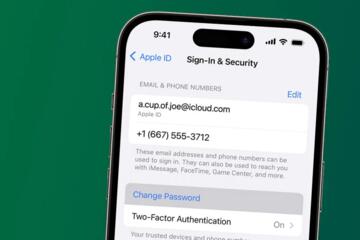
Enable multi-factor authentication for the vault account if the product offers it. Use a method you can keep for years, such as a hardware security key or a TOTP authenticator app. Avoid SMS-only 2FA for high-value accounts when a stronger option exists.
In practice, you will register the second factor while you still have access to your email and your existing login sessions. If you wait until you are locked out, recovery becomes harder and more error-prone.
Confirm that the vault unlock and the 2FA prompts behave as expected on mobile and desktop. Test it once, then log out and log back in to verify the workflow, which is where many people discover they forgot a step.
Use 2 factors, not 1. That reduces single-point failure.
Real Setup Case Examples
Example: Email First, Then Banking
An anonymized user starts with 3 accounts: email, a bank portal, and a health portal. They change the email password using the manager, enable a hardware security key for email 2FA, and then update the bank portal password. They test login on both a laptop and a phone before closing the session. The user also disables browser password saving to avoid parallel records.
Two weeks later, they notice a login prompt on a device they no longer use. They remove that device from the account settings, then review the password manager entries for any “imported but not updated” accounts. The user’s main lesson is that email controls password resets, so it gets handled first.
Example: Import With A 30-Day Audit
Another anonymized user imports passwords from a browser and a legacy password file. They accept the import to avoid losing access, but they immediately mark the top 15 accounts for replacement. Over 30 days, they generate new unique passwords for email, banking, and health services, then they audit duplicates and weak patterns for the remaining entries.
They keep autofill enabled but verify that the extension selects the correct entry on each login page. The mild frustration they report is that some sites reject generated passwords with certain symbols, so they adjust generator settings for those sites and retest.
Comparison Table
| Decision Point | What To Prefer | What To Avoid | How To Verify |
|---|---|---|---|
| Vault encryption model | Published details on encryption and key handling | Vague claims without key-derivation or access model | Read security documentation and recovery policy |
| Master password | Long passphrase, typed from memory | Short passwords or reuse from email | Use a password generator for length, then test recall |
| 2FA method | Hardware key or authenticator app | SMS-only for high-value accounts | Test unlock on phone and desktop |
| Recovery plan | Offline codes and second key | Codes stored only in cloud notes | Simulate “new device” and “lost phone” steps |
Checklist for the first 60 minutes:
- Install the manager on 1 desktop and 1 phone.
- Create the master password and set vault lock timeout.
- Enable 2FA for the vault account if offered.
- Save recovery codes offline.
- Turn on the browser extension and disable browser password saving.
- Update email password and test login.
- Update 1 banking or health portal password and test login.
Do not rush the tests. They catch silent failures.
Mistakes That Break Security
One mistake is storing the master password in the same password manager vault. That creates a circular dependency where you cannot recover if you forget the master password. Another mistake is leaving recovery codes in a screenshot folder on a synced phone, which defeats the point of offline backup.
People also mis-handle 2FA. They enable it on the vault but forget to enable it on email, then they lose the phone and cannot complete password resets. The dependency chain runs through email, so email 2FA and recovery planning must match the vault plan.
Another practical error is changing passwords without updating the manager entry. If you change a site password manually but do not update the stored entry, autofill will log you in with the old password and you will get locked out after repeated attempts. This is where a small habit helps: after each password change, open the entry and confirm it matches the new password.
FAQ
How Do I Choose A Password Manager?
Compare the published encryption and key-handling model, the vault unlock flow, and the recovery options. Prioritize tools that document how encryption keys are derived and how recovery works if you lose access to your second factor.
Should I Use A Hardware Security Key?
Use a hardware security key for email and other high-value accounts when the provider supports it. It reduces reliance on SMS and makes account takeover harder if your phone number is compromised.
What Master Password Length Works?
Use a long passphrase and avoid short passwords. A practical target is 4 to 6 random words or an equivalent length, then verify you can type it without copying.
Can I Use Browser Autofill Alone?
Browser autofill can work for a small number of accounts, but it fragments your password storage and increases the chance of reuse. A dedicated manager centralizes entries and can generate unique passwords with consistent rules.
What If I Lose My Phone?
Use your offline recovery codes or a second factor stored on another device or key. Before you rely on recovery, test the “lost phone” path while you still have access to your email and the vault.
Author's Insight
A password manager reduces credential reuse and typing errors, but it does not remove the need for recovery planning. The biggest practical risk is indirect access through email account recovery, not the vault encryption itself. A careful setup treats the first 60 minutes as a security test: install, enable 2FA, save recovery codes offline, update email, then verify logins on more than one device. If you cannot test the workflow, you will likely discover gaps during a lockout, which is when mistakes cost the most time.
Key Takeaways
Start by selecting a manager with a clear encryption and recovery model, then create a long master password you can type from memory. Enable 2FA for the vault and for email, save recovery codes offline, and test autofill and logins on at least 2 devices. Update email first, then banking and health portals, and audit for duplicates over 30 to 60 days.
Limits exist: if you lose the master password and recovery options, you may not be able to regain access. If you suspect compromise of an email or health account, contact the service provider’s support channels and follow their account recovery steps promptly.