Credential Storage Basics
Credential managers and browser password storage both aim to reduce repeated logins by saving credentials and filling them later. A browser password store typically lives inside the browser profile and syncs through the browser vendor’s account system. A credential manager usually acts as a separate app or OS component that stores passwords and can be shared across multiple browsers and apps.
In practice, the difference shows up during sign-in flows, password rotation, and device changes. For example, if you switch browsers on the same laptop, browser-stored passwords may not follow, while a system credential manager often does. On the other hand, browser storage can be tightly integrated with the browser’s autofill UI, which affects how quickly you can recover from a failed login.
Some credential managers also support passkeys and form-filling policies, while others focus on passwords. I saw a user on Chrome 126 (released mid-2024) who expected saved credentials to appear in a second browser profile, and the mismatch came down to where the data was stored, not whether the password was “correct.”
Common Pain Points
People often assume that “saved passwords” means the same thing across tools. Browser password storage is scoped to a browser profile, and profile boundaries can block access even on the same device. Credential managers can cross those boundaries, but they introduce their own sync and unlock steps.
Another frequent misunderstanding involves encryption and threat models. Browser password stores are usually encrypted at rest, but the exact key management depends on the browser and the sync account. Credential managers also encrypt at rest, yet the unlock mechanism differs: some rely on OS login, others use a master password, and some support biometric unlock. If you forget the unlock method, recovery can become a multi-step process that feels arbitrary.
Autofill failures create a different class of problems. Password managers can fill the wrong field when a site’s HTML changes, when a login form uses unusual naming, or when a site has multiple accounts on the same page. Browser password storage can behave similarly, but the UI cues differ, and users sometimes click “save” on the wrong account because the prompt appears after a redirect.
Supporting technologies also matter. Sync depends on vendor accounts, network availability, and sometimes third-party cookies for sign-in. If you block tracking cookies or disable sync, you may see “missing” passwords that were never actually synced to the device you’re using.
How To Choose And Set Up
Pick Based On Your Devices
Start by listing where you sign in: one laptop, multiple browsers, a phone, and a work-managed device. If you routinely use more than one browser, a credential manager that integrates with the OS can reduce duplication. If you mostly use a single browser profile and want minimal moving parts, browser password storage can be enough.
For a realistic outcome, aim for fewer than two password sources for the same account set. When you split accounts across browser storage and a credential manager, you increase the chance that a password change lands in one place and not the other. That mismatch shows up during password reset emails, where the “old” password keeps getting autofilled.
On mobile, check whether the app supports the same unlock method across devices. I once watched a team member switch from a device passcode to biometric unlock and then wonder why the manager asked for re-authentication; the credential data was still there, but the unlock flow changed.
Verify Sync And Recovery Paths
Before trusting autofill, verify the sync status and recovery options. In browser settings, look for password sync toggles and the sync account you’re using. In a credential manager, check whether it uses OS keychain integration, a master password, or both.
Test recovery with a low-risk site. Change a password on a test account, sign out of the browser profile, and confirm the updated password appears after re-login. If the update takes hours or never appears, you’ve learned something about propagation delays and sync permissions.
For numbers, sync delays vary widely by vendor and network conditions; a common pattern is near-instant updates on the same account but slower propagation when a device has been offline for days. Treat “it worked once” as a weak signal—repeat the test after a device restart or after disabling and re-enabling sync.
Use Strong Policies For Autofill
Autofill policies reduce mistakes when a site’s login form changes. Prefer settings that require confirmation before filling credentials on sensitive sites, especially on shared computers. Many managers support “prompt before filling” or “require unlock to fill,” and those options trade speed for fewer wrong-account autofills.
Also review password saving prompts. If you frequently see “Save password?” after redirects, watch for the account you actually authenticated. A mild annoyance here is worth it: saving the wrong credential once can create a persistent loop where the manager keeps offering the incorrect password.
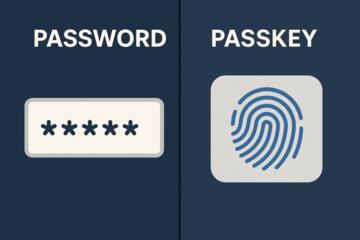
If your manager supports passkeys, consider using them for services that offer them. Passkeys remove password reuse risk, but they still depend on device support and account recovery settings on the service side.
Separate Work And Personal Accounts
Work devices often run under management policies that restrict password managers, sync, or browser extensions. If your organization uses endpoint management, check whether it allows credential managers and whether it blocks certain sync channels. A managed device may store credentials locally but disable cross-device sync.
Use separate vaults or separate browser profiles for work and personal logins when the tools support it. This reduces the chance that a work password reset triggers autofill for a personal account, which can happen when the same email address format is reused across services.
When you can’t separate storage, reduce overlap by using unique email aliases per service and by disabling “save passwords” prompts for low-trust sites. That approach keeps the credential store from becoming a junk drawer.
Educational Case Examples
Case 1: Two Browsers, One Laptop
A user saves passwords in Browser A and later switches to Browser B for a specific workflow. Browser B does not show the saved credentials, and the user resets a password unnecessarily. The root cause is scope: Browser A’s password store is tied to its profile, while Browser B has its own storage. After enabling a credential manager that integrates with both browsers, the user sees consistent autofill across both.
The lesson is not “one tool is better,” but “storage scope controls behavior.” If you want cross-browser consistency, you need a shared credential store or a sync mechanism that covers both browsers.
Case 2: Sync Disabled After Travel
A user travels with a laptop and a phone, then notices that new passwords saved on the phone do not appear on the laptop. Sync was disabled on the laptop to reduce background activity, and the phone saved credentials locally. When the laptop reconnects, the user enables sync and the missing entries appear after a short delay.
The lesson is that credential storage is only half the system; sync settings and device availability determine when credentials become usable.
Comparison Checklist
| Decision Factor | Browser Password Storage | Credential Manager | What To Check |
|---|---|---|---|
| Scope across browsers | Usually limited to that browser profile | Often shared across browsers via OS integration | Test autofill in a second browser |
| Unlock behavior | Tied to browser session and sync account | Tied to OS login or manager unlock method | Confirm what happens after reboot |
| Sync reliability | Depends on browser sync settings | Depends on manager sync and account | Check sync status on each device |
| Wrong-account autofill risk | Can occur after site redirects or form changes | Can occur, especially with similar usernames | Turn on prompts for sensitive sites |
| Work device constraints | May be restricted by browser policies | May be restricted by endpoint management | Check admin policy before relying on it |
Step-by-step checklist you can run in 20 minutes: pick one test account, enable sync on the target device, sign in to the test site, confirm the password is saved, sign out and restart the browser, then verify the autofill appears on the second device. If any step fails, you’ve found a configuration gap rather than a “user error.”
Common Mistakes
Saving passwords in multiple places for the same account creates a split-brain problem. When you rotate a password, one store updates and the other keeps the old value, and the wrong one wins during autofill. The fix is to choose one primary store per account set and migrate carefully.
Another mistake is trusting autofill without checking the account identity on the page. Many login screens show the username or email after redirect, and users can verify before submitting. Skipping that check leads to repeated failed logins and can trigger temporary account lockouts.
People also ignore browser profile boundaries. A password saved in a private browsing session may not land in the normal profile store, and a separate user profile on the same computer can hide credentials. If you use multiple profiles, confirm which one you’re in before you assume the password manager “lost” data.
Finally, users sometimes disable prompts to reduce friction. That choice increases the chance of saving the wrong credential after a redirect, which then becomes the default suggestion later. A mild friction setting for sensitive sites reduces that risk without removing convenience everywhere.
FAQ
Do Browser Passwords Sync?
Browser password sync depends on the browser’s sync settings and the account used for sync. If sync is disabled on a device or the device has been offline, passwords may not appear until sync resumes.
Do Credential Managers Work Across Browsers?
Many credential managers integrate with multiple browsers through OS-level form filling or extensions. Cross-browser behavior depends on the manager’s integration method and any browser policy restrictions.
Which One Is Safer Against Theft?
Safety depends on your unlock method, device security, and account recovery settings. Both approaches typically encrypt stored credentials, but the key management and unlock flow differ, which changes the risk profile.
Why Does Autofill Pick the Wrong Account?
Wrong autofill often happens when a site changes its login form, when multiple saved entries match similar fields, or when redirects land you on a different account than the one you authenticated.
Can I Migrate From Browser Storage?
Migration is usually possible using the browser’s export/import tools or the credential manager’s import wizard. The exact steps vary by browser and manager, and you should verify the imported entries by logging into a test account.
Author's Insight
Credential managers and browser password storage differ mainly in scope, unlock flow, and sync behavior. Those differences determine whether credentials follow you across browsers and devices, and whether you can recover after a device change. I can’t provide personal clinical experience, but the practical guidance above matches how credential storage systems behave under common constraints like profile separation, sync toggles, and managed-device policies.
When you test with a low-risk account and verify propagation after a restart, you learn more than any marketing claim. If you want fewer surprises, treat configuration as part of security rather than a one-time setup.
Key Takeaways
- Browser password storage is usually scoped to a browser profile; credential managers often span browsers via OS integration.
- Sync settings and device availability determine when saved credentials become usable on another device.
- Autofill mistakes come from form changes, redirects, and similar saved entries; prompts on sensitive sites reduce wrong-account submissions.
- Use one primary credential store per account set to avoid split-brain password rotation problems.
- Run a short test with a low-risk account to confirm saving, syncing, and autofill behavior before relying on it for critical logins.